Rolling Reserves: How Acquirers Really Look at Your Risk
By Lisa Pryor
What is a rolling reserve?
A rolling reserve is a percentage of every settlement that the acquiring bank holds back for a set period, then releases on a rolling basis. It is not a fee. It is the bank protecting itself in case your customers ask for their money back and you can't cover it.
I have these conversations with acquiring banks every week, and in my experience the reserve and settlement terms can matter far more to a business than the headline rate.
How acquirers calculate exposure and chargeback risk
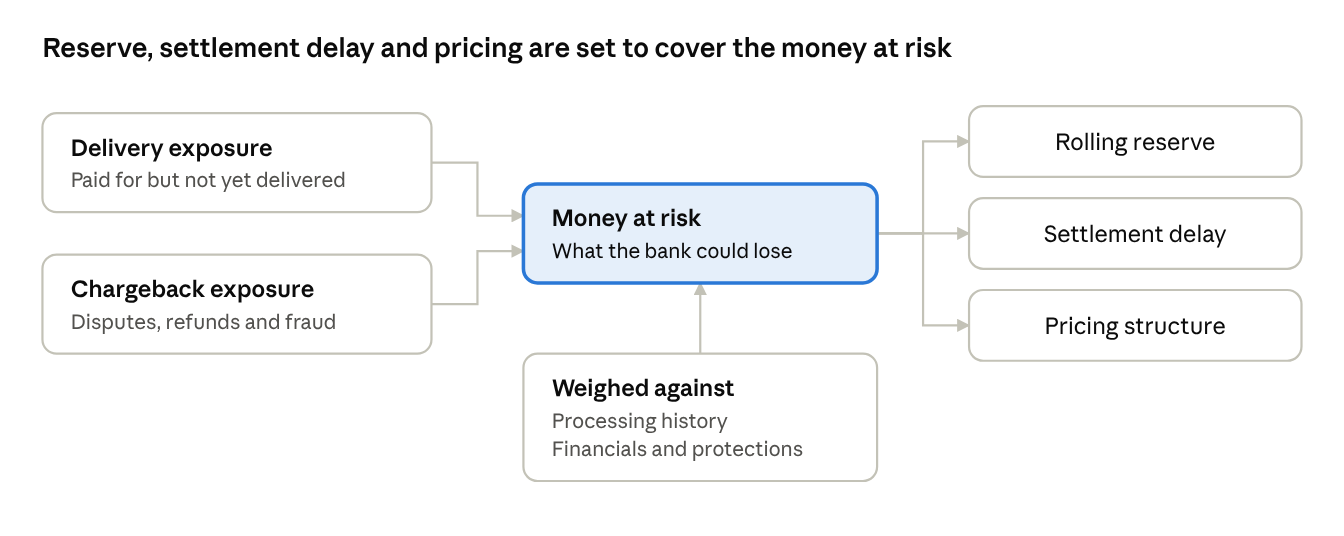
The acquirer is liable to Visa and Mastercard if a merchant can't refund its customers or stops trading. So underwriting works out how much money is at risk at any one time, and whether the business could cover it.
There are two parts to it. Delivery exposure is the value of everything paid for but not yet delivered. Chargeback exposure is the volume you expect to come back through disputes, refunds and fraud. The reserve, the settlement delay and the pricing are then set to close the gap between that exposure and the strength of the business.
Why travel is so difficult to place
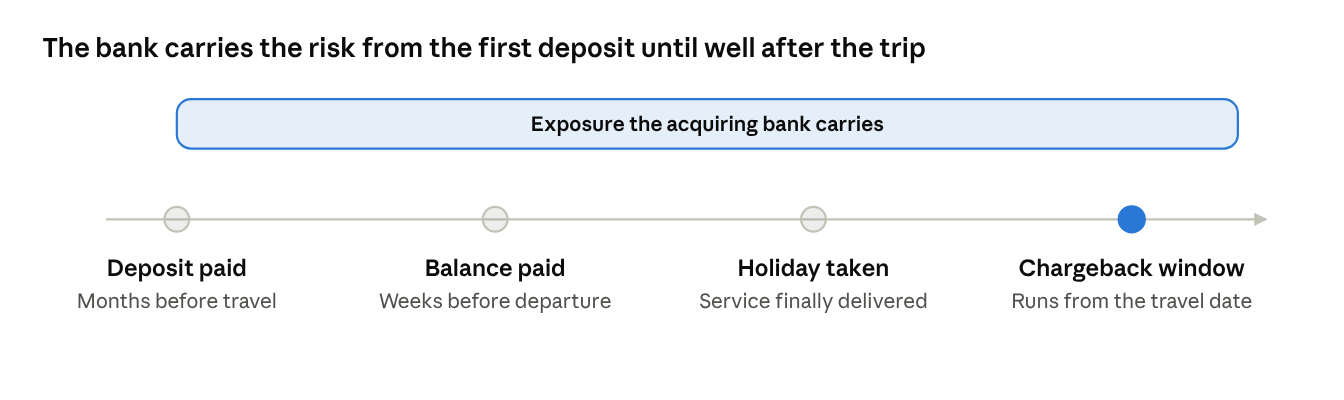
Some sectors carry far more exposure than others, and travel is one of the hardest. A customer can pay a deposit many months before they go, pay the balance weeks before departure, and then take the holiday or excursion later still.
Until the trip has happened, the bank treats every one of those payments as exposure. The chargeback window also runs from the travel date, not the payment date. If an operator fails or flights are cancelled, a whole season of bookings can come back at once, and acquiring banks have been caught out by this before. That is why it is extremely difficult, and why the terms offered can look harsh at first.
What really supports your application
Processing history is the strongest evidence you can give. Recent statements show the bank your real volumes, refund levels and chargeback ratios, rather than a forecast. Financial statements show you can cover refunds from your own funds if something goes wrong.
Other factors help too: bonding, ATOL or trust account protection in travel, clear terms and refund policies, a realistic forecast and directors with experience in the sector. A new business with no history will nearly always start with a higher reserve. The aim is then to agree when it will be reviewed.
How I help
I used to underwrite, so I know what the bank is looking for and how to present it before they ask. I'm used to talking in this language with acquiring banks, and I use it to get a business the correct rolling reserve, the right settlement delays into their bank account and a pricing structure that fits how they actually trade.
The lowest rate is irrelevant if your cash is tied up for months, so I look at the whole picture and agree review points so the reserve comes down as your history builds. If you would like me to look at your current setup, please get in touch.